1876 CENTENNIAL OF INDEPENDENCE
Declaration Of Independence - Independence Hall Medals
GW-829, Baker 389, HK-79a, silver, 42mm
IMAGE NEEDED
GW-829, Baker 389A, HK-78, copper, 42mm
 |  |
(image courtesy of Heritage)
GW-829, Baker 389B, HK-79b, brass, 42mm
IMAGE NEEDEDGW-829, Baker 389C, HK-79, silver, 42mm
IMAGE NEEDED Declaration Of Independence - John Hancock Signature Medals
Baker 391, silver, 42mm
IMAGE NEEDED
Baker 391A, copper, 42mm
IMAGE NEEDED
Baker 391B, bronze, 42mm
 |  |
(on line image)
Baker 391C, brass, 42mm
IMAGE NEEDED
Baker 391D, white metal, 41.9mm
 |
 |
Isaac F. Wood's Fit Keystone
Baker 408, silver, 31mm
IMAGE NEEDED
Baker 408A, bronze, 31.5mm
 |
 |
Baker 408B, white metal, 31mm
 |
 |
Baker 408C, copper, 31mm
IMAGE NEEDED
Brooklyn Sunday School Union Medal
The Brooklyn Sunday School Union was founded April 8, 1816 with a
focus on establishing Sunday Schools in Brooklyn, New York with many
of these eventually becoming churches. In 1829 the first Anniversary
Day Parade was held and in 1905 a state law was passed giving the
borough's school children a school holiday to participate in the parade.
This event is still celebrated annually. Although this medal does not
mention the parade, judging by the date it was the struck for the
47th anniversary of the parade and not the establishment of the Union.
GW-873, Baker 371, silver, 31.4mm
IMAGE NEEDED
GW-873, Baker 371A, copper, 31.4mm
 |
 |
GW-873, Baker 371B, brass, 31.4mm
 |  |
GW-873, Baker 371C, white metal, 31.4mm
 |  |
Muling with the DeWitt USG 1868-14 obverse die, brass, 31.2mm
 |  |
Jersey City Sunday Schools
First obverse, GW-858, Baker 372, silver, 28mm
First obverse, GW-858, Baker 372A, bronze, 28mm
IMAGE NEEDED
First obverse, GW-858, Baker 372B, white metal, 28mm
 |  |
IMAGE NEEDED
First obverse, GW-858, Baker 372B, white metal, 28mm
 |
 |
The note in Baker suggest the "P" on the bust indicates
the obverse die was designed by Pacquet. Neil Musante
attributes it to David Proskey per Frossard
attributes it to David Proskey per Frossard
GW-860, Second obverse, Baker 373, silver, 28mm
IMAGE NEEDED
GW-860, Second obverse, Baker 373A, copper, 27.6mm
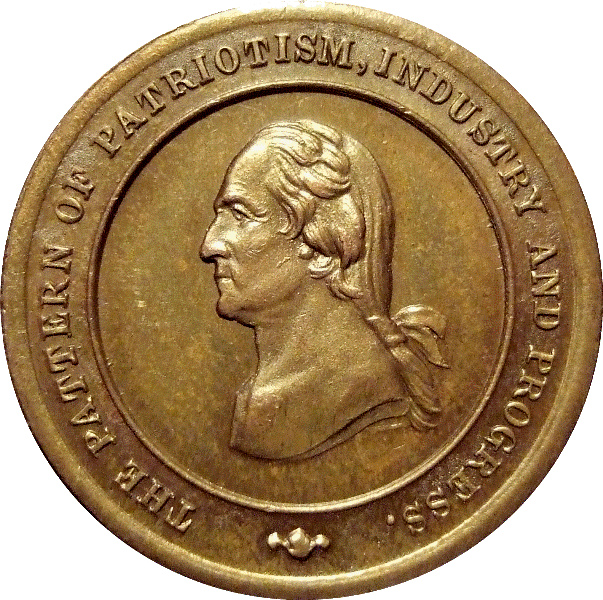 |  |
GW-860, Second obverse, Baker 373B, white metal, 28mm
 |
 |
IMAGE NEEDED
Third obverse, Baker 374A, bronze, 28mm
 |
 |
Third obverse, Baker 374B, white metal, 28mm
 |  |
Fourth obverse, bronze, 28mm
 |
 |
Fourth obverse, white metal, 27.7mm
 |  |
Not technically a Washington piece but this seemed the best place
for it. This obverse die is
the reverse of Baker 414 and with the similarity in design that may have
been the original combination although it is called the second obverse.
Martha Washington Memorial Medal
Bronze, 27.6mm
 |
 |
Brass, 27.7mm
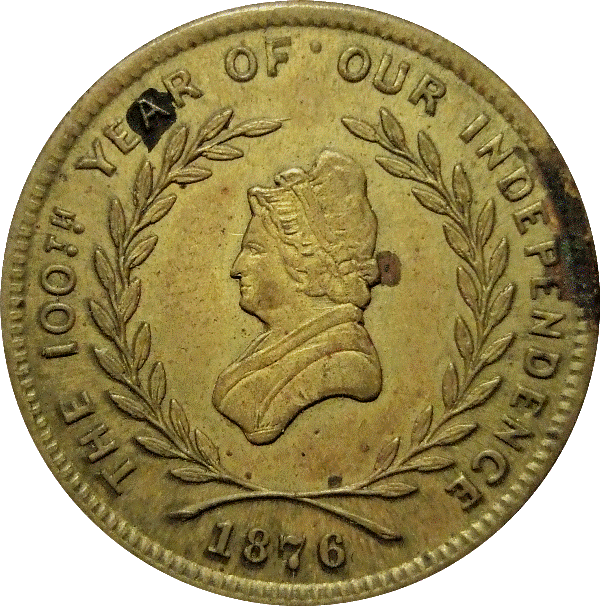 |
 |
White metal, 27.7mm
 |
 |
| George H. used this simple Martha Washington die with several other dies. If the original pairing was with the George Washington die from Baker 414 my guess is he created the Memorial Medal die and struck these pieces to capitalize on the patriotic fervor of the Independence Centennial. Or was this the original pairing? |
The 100th Year Medals
First obverse, GW-842, Baker 413, copper, 27.8mm
 |  |
First obverse, GW-842, Baker 413A, white metal, 27.8mm
IMAGE NEEDED
Second obverse, GW-843, Baker 414, copper, 27.7mm
 |  |
Second obverse, GW-843, Baker 414A, brass, 27.7mm
IMAGE NEEDED
Second obverse, GW-843, Baker 414B, white metal, 27.7mm
IMAGE NEEDED
Children of America
Baker 415, GW-902, silver, 34mm
IMAGE NEEDED
Baker 415A, GW-902, bronze, 34mm
(image courtesy of John Sallay)
Baker 415B, GW-902, copper, 34mm
IMAGE NEEDED
Baker 415A, GW-902, bronze, 34mm
 |  |
Baker 415B, GW-902, copper, 34mm
 |
 |
(on line image)
Baker 415C, GW-902, white metal, 34mm
 |
 |
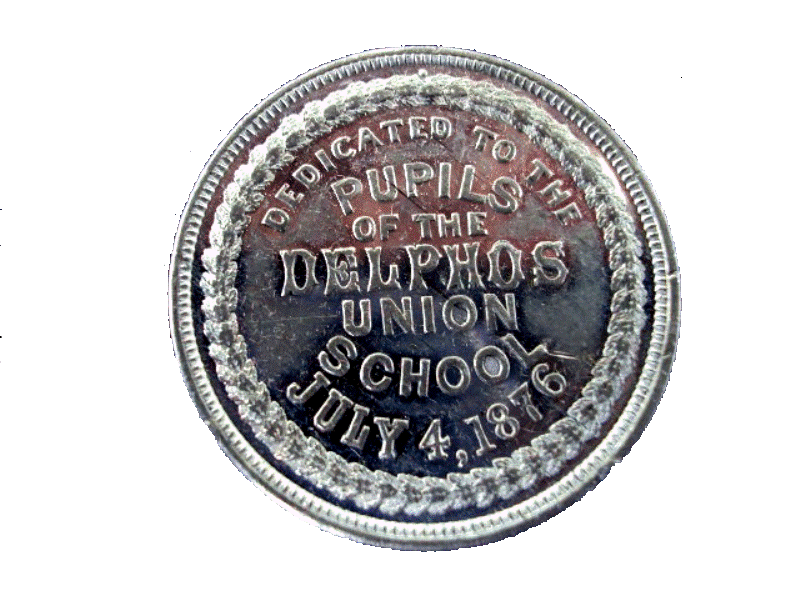
Delphos Union School
Baker 416, white metal, 34.2mm
 |  |
(on line image)
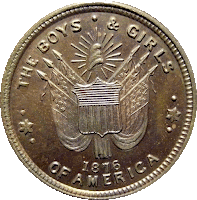
Boys & Girls Of America
First obverse
GW-845, Baker 417, copper, 27.7mm
 |  |
GW-845, Baker 417A, bronze, 28mm
| IMAGE NEEDED |
GW-845, Baker 417B, brass, 27.7mm
 | 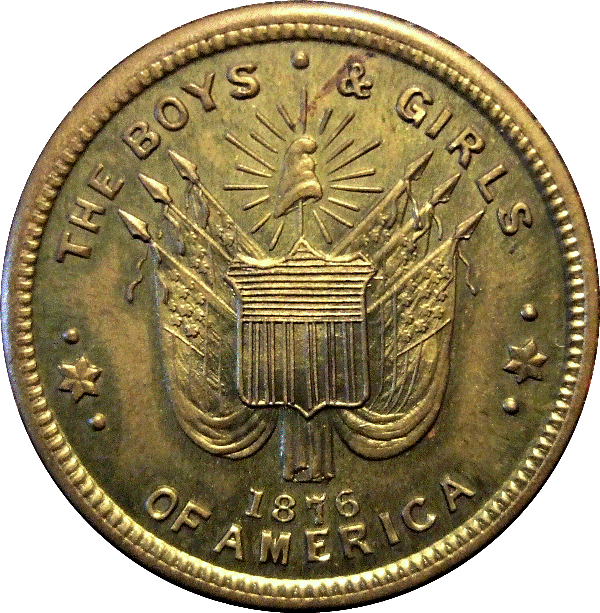 |
GW-845, Baker 417C, white metal, 27.7mm
 |  |
Second obverse
GW-844, Baker 418, copper, 28mm
 |
 |
GW-844, Baker 418A, bronze, 28mm
IMAGE NEEDED
GW-844, Baker 418B, white metal, 28.1mm
 |
 |
Third obverse
GW-846, Baker A418, white metal, 28mm
Double head Mule
GW-854, Baker 417M, bronze, 28mm
IMAGE NEEDED
GW-854, Baker 417N, white metal, 28mm
Baker list this piece with the Boys & Girls Of America series
but these seems out of place since there is no reference to this
on either dies. Musante list it as a double head mule - 3rd and
4th obverses.
"July 4th, 1876" mules
This die seemed to be very popular with George H. and one he muled
extensively. The Centennial in 1876 was a boom time for medallist,
especially if you could put Washington's image on the medal. In his book "Medallic
Washington" Neil Musante calls it "Battle Series, 2nd obverse" but I am not sure
this was its original use. In fact it was used with so many other dies there
may not have been created for a specific medal.
GW-903, Baker C-415, silver, 34mm
(composite image)
The Liberty Sculpting die may also be a generic die George H. pulled
out when needed. It is found on the Cromwell Award medal for the
College of the City of New York as well as another seemingly
generic school award medal. An example of this combination
was in the Schuster collection and may be unique.
GW-904 and 905, white metal, 34 mm
(composite images)
Neither of these combinations have been seen but were listed in the
L. Bayard Smith catalogue as LBS-66.2 and 66.3. Both of the reverses
are found on generic school medals, either with the Liberty sculpting die
or with each other. If they exist they are probably unique.
 |  |
Double head Mule
GW-854, Baker 417M, bronze, 28mm
IMAGE NEEDED
GW-854, Baker 417N, white metal, 28mm
 |  |
Baker list this piece with the Boys & Girls Of America series
but these seems out of place since there is no reference to this
on either dies. Musante list it as a double head mule - 3rd and
4th obverses.
"July 4th, 1876" mules
This die seemed to be very popular with George H. and one he muled
extensively. The Centennial in 1876 was a boom time for medallist,
especially if you could put Washington's image on the medal. In his book "Medallic
Washington" Neil Musante calls it "Battle Series, 2nd obverse" but I am not sure
this was its original use. In fact it was used with so many other dies there
may not have been created for a specific medal.
GW-903, Baker C-415, silver, 34mm
 |  |
The Liberty Sculpting die may also be a generic die George H. pulled
out when needed. It is found on the Cromwell Award medal for the
College of the City of New York as well as another seemingly
generic school award medal. An example of this combination
was in the Schuster collection and may be unique.
GW-904 and 905, white metal, 34 mm
|  |
|  |
Neither of these combinations have been seen but were listed in the
L. Bayard Smith catalogue as LBS-66.2 and 66.3. Both of the reverses
are found on generic school medals, either with the Liberty sculpting die
or with each other. If they exist they are probably unique.
Sheldon Family Arms Medal
Obverse - Nude bust of Washington right. 14 stars above, DECLARATION below.
Inscription around TO COMMEMORATE THE 100th ANNIVERSARY OF
THE OF INDEPENDENCE
Reverse - Coat of Arms with banner below inscribed HOPESHELDON in center
within a circle. Inscription around + H.L.S 1821 + H.A.S. 1870 + AUG. 15.
GW-881, Baker 641, bronze, 39.8mm
 |
 |
GW-881, Baker 641A, white metal, 39mm
 |  |
Henry Luther Sheldon was born August 15, 1821 in Salisbury Vermont.
In 1841 he moved to Middlebury, Vermont and found employment with
the local post office. He rose to prominence in the community first as the
organist in St. Stephen's episcopal Church and then with his many business
ventures, including real estate investments locally and as far away as
Nebraska and Wisconson. His numismatic career began in 1875 when he
purchased a Roman coin for one dollar. His extensive collection was
eventually traded to Middlebury College for early Middlebury newspapers.
In 1882 he purchased the house he had been boarding in and incorporated
the Sheldon Art Museum, Archeological and Historical Society which is
the oldest community charted art museum in the country.
His older brother Harmon A. Sheldon died on August 15, 1870
which explains the rest of the inscription.
Sheldon Family Arms / Seated Liberty mule, white metal, 39.8mm
 |
 |
not have an attribution but it is this medal, and subsequent research
that has led me to list this as the work of George H. Lovett.
An inquiry with the Henry Sheldon Museum led me to Ellery Foutch,
Associate Professor of American Sudies at Middlebury College. Among
the wealth of information she provided was an image of the invoice
from George H. to Henry Sheldon seen below.
_edited.jpg)
This invoice is only for 12 in white metal but another letter mentions a
package and invoice from Scott & Co. so I assume the dies were sent
there to strike other medals. But a more interesting item is a letter from
George H. in which he says "The head of Mars was too large for my collar
but I have another with Minerva"! Could the medal above have been an
example he struck for Henry to see - possibly the only one?